
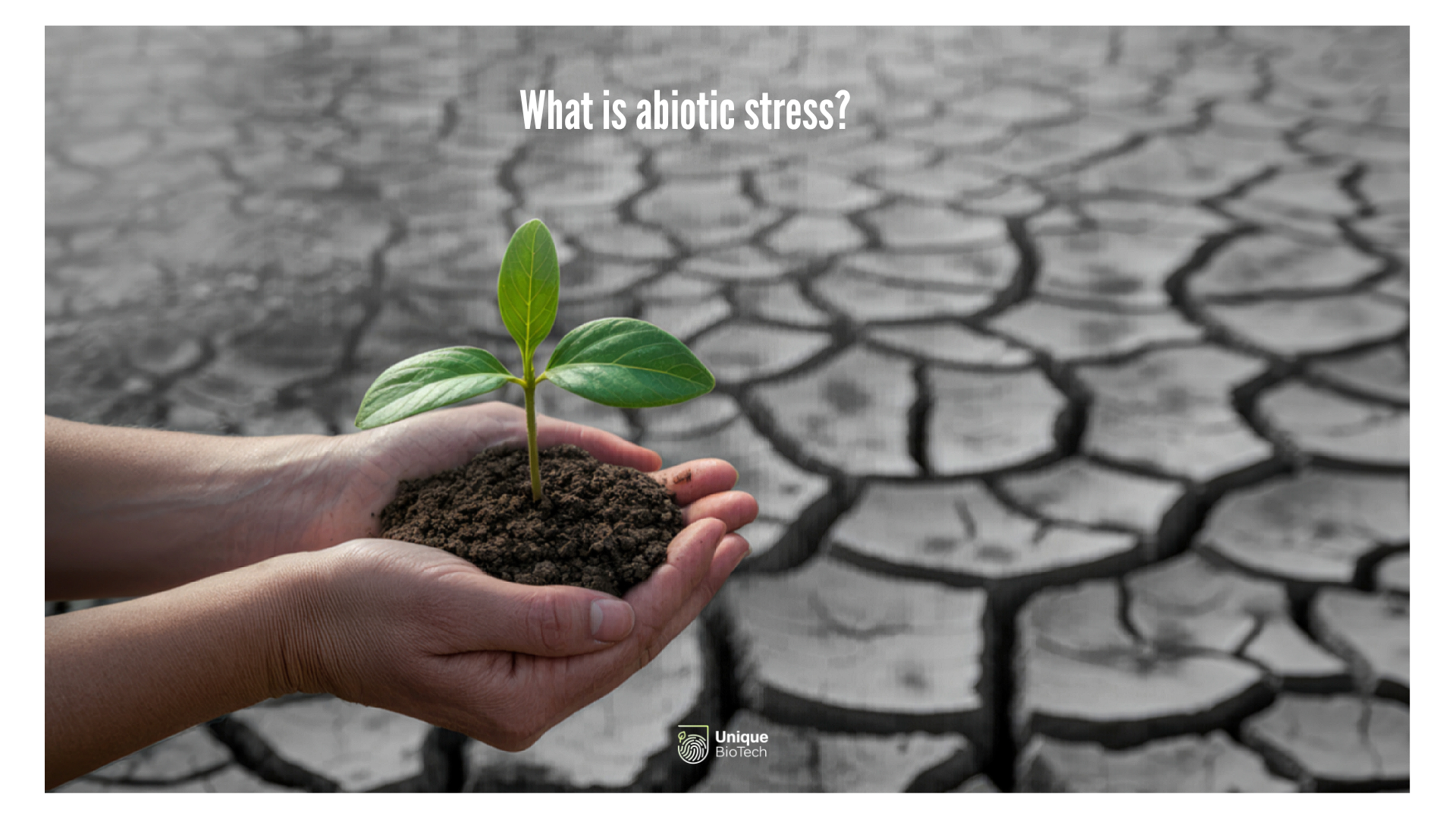
Abiotic stress refers to the pressure exerted by non-living environmental factors that negatively affect plant growth, development, and productivity. Environmental conditions such as water deficiency, extreme temperatures, frost, salinity, intense light, nutrient deficiency, and heavy metal accumulation can create abiotic stress on plants.
A significant portion of yield losses in agricultural production stems not from pests or diseases, but directly from these types of stresses caused by environmental conditions. For this reason, abiotic stress has become one of the most critical topics in modern agriculture.
How does abiotic stress affect plants?
Plants are living organisms dependent on environmental conditions, and their developmental processes are largely influenced by temperature, water, light, and soil conditions. Imbalances in these conditions can disrupt the plant’s physiological processes and slow down its development.
Under abiotic stress, a plant’s photosynthesis rate may decrease, cell structure can be damaged, water balance may be disrupted, and root development can weaken. Consequently, stunted plant growth, leaf scorching or wilting, reduced fruit quality, and yield loss may occur.
What are the types of abiotic stress?
Abiotic stress is not caused by a single factor. Different environmental conditions can create various types of pressure on plants. The most common types of abiotic stress include:
Drought stress
Drought occurs when a plant cannot access sufficient water. Intracellular water balance is disrupted, growth slows, and plant metabolism is suppressed. Prolonged water scarcity, in particular, can lead to severe yield losses.
Temperature stress
Excessive heat conditions can increase water loss in plants and disrupt physiological activities. High temperatures can result in leaf scorching, flower drop, and developmental abnormalities.
Cold and frost stress
Low temperatures and frost events can cause structural damage to plant cells. With damage to intracellular fluid, plant tissues can weaken, and the recovery process may become difficult.
Salinity stress
An increase in soil salt content makes it difficult for plants to absorb water. This condition can negatively affect both root activity and overall plant development.
Nutrient deficiency and imbalance
Insufficient or imbalanced essential nutrient elements required by the plant also constitute a source of abiotic stress. This can lead to stunted growth, leaf deterioration, and quality loss.
Light and radiation stress
Conditions such as excessive light, insufficient light, or intense sun exposure can also disrupt the plant’s natural balance. Photosynthesis capacity may be affected, and plant development can weaken.
Why does abiotic stress reduce agricultural yield?
When a plant is under stress, it diverts the energy it would normally use for growth and yield towards defense mechanisms, disrupting its normal developmental cycle. This means the plant attempts to adapt to existing conditions instead of forming fruits, developing roots, or producing quality yields.
Therefore, abiotic stress affects not only the plant’s appearance but also directly impacts production quantity and quality. Especially with climate change leading to increased drought, sudden temperature shifts, and extreme weather events, this effect is becoming more frequent.
What is the difference between abiotic and biotic stress?
Abiotic stress originates from non-living environmental factors. Factors such as drought, temperature, frost, salinity, and nutrient deficiency fall into this category. Biotic stress, on the other hand, relates to living organisms that cause disease in plants. Pests, fungi, bacteria, and viruses are sources of biotic stress.
Although these two types of stress arise from different sources, they can have similarly debilitating effects on plants. In some cases, plants under abiotic stress may also become more vulnerable to biotic stresses.
How can plants be supported against abiotic stress?
The most crucial approach in combating abiotic stress is to make the plant more resilient to environmental pressures. This involves proper irrigation management, balanced fertilization, soil health preservation, and appropriate agricultural practices.
Additionally, solutions that support the plant’s internal defense mechanisms are prominent. Approaches that promote root development, help maintain cellular balance, and strengthen antioxidant defenses can contribute to the plant remaining more stable under stress conditions.
Especially in common abiotic stress conditions like drought and frost, support aimed at increasing the plant’s internal resistance becomes valuable for agricultural sustainability.
Why has climate change made abiotic stress more significant?
Environmental risks that were once observed during specific periods can now be experienced more frequently and intensely. Prolonged droughts, sudden frost events, extreme heatwaves, and water scarcity create greater uncertainties for producers.
For this reason, abiotic stress is no longer merely a technical agricultural term; it has become a strategic issue that must be considered in many areas, from production planning to yield management. Increasing the plant’s resilience to these conditions is critically important for the future of agriculture.
Frequently Asked Questions
Why are plants so quickly affected by environmental conditions?
Plants are living organisms directly influenced by their environment. Changes in temperature, water, light, and soil conditions can quickly disrupt the plant’s physiological balance and slow down its development process.
What could be the reason for unseen yield losses in agricultural production?
In many cases, yield loss is not solely due to diseases or pests. Environmental pressures such as water scarcity, sudden temperature changes, salinity, or nutrient imbalance can also negatively impact production unnoticed.
How can one tell if a plant is under stress?
Under stress, plant growth may slow, leaves may wilt or scorch, root development can weaken, and product quality may decline. While symptoms are sometimes clearly visible, in some cases, stress begins with internal physiological imbalances.
Why do climate irregularities make agricultural planning difficult?
Because events such as drought, sudden frost, extreme temperatures, and irregular rainfall make it difficult to predict the production process. This necessitates establishing a more careful and resilient system in all agricultural planning, from planting to harvest.
Which approach is important for increasing plant resilience?
To increase plant resilience, managing external conditions alone is not sufficient. Practices that support root development, maintain cellular balance, and strengthen the plant’s internal defense mechanisms are also crucial.
Why is it important to take early precautions against environmental stresses?
Because it may not always be possible to fully reverse the damage once stress has occurred. Early precautions help the plant enter stress conditions more prepared and limit yield loss.