
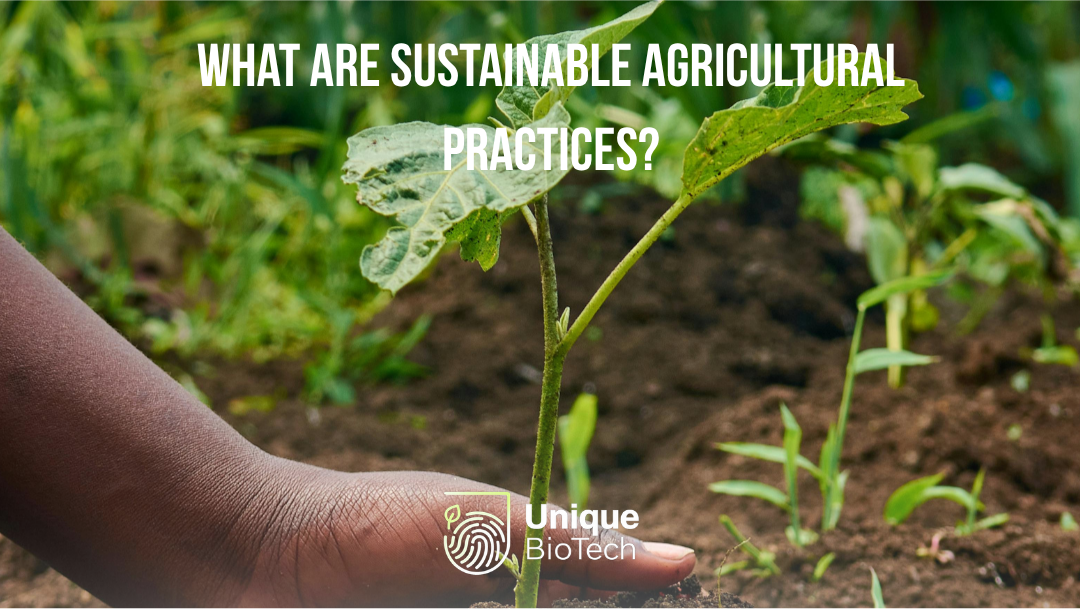
Sustainable agricultural practices are field-based measures that support productivity while conserving natural resources in agricultural production and make the production system more balanced. Unlike theoretical approaches to sustainability, these practices refer to methods that are directly reflected in daily production practices. In other words, the focus here is not on what sustainability is, but on how it is applied in the production process.
Today, the leading practices in sustainable production revolve around the controlled use of water, soil conservation, balanced support for plant growth, optimization of input use, and reduction of environmental impact. This approach focuses not only on short-term results but also on the future of the production area.
Why is soil analysis-based planned fertilization an important practice?
One of the most fundamental steps in sustainable agricultural practices is making fertilization decisions based on analysis results rather than guesswork. Planning based on soil analysis allows you to understand the current condition of the soil and assess which elements are deficient or excessive more accurately.
This approach helps prevent unnecessary fertilizer use, allows for the creation of a fertilization program better suited to the plant’s needs, and reduces soil depletion over the long term. It also contributes to establishing a more balanced production structure in terms of cost control.
How do controlled irrigation practices contribute to crop production?
Unplanned and habitual water application can lead to both water wastage and imbalances in plant growth. For this reason, controlled irrigation plays a significant role in sustainable agricultural practices. The goal here is not merely to use less water, but to irrigate at the right time and in the appropriate amount to meet the plant’s needs.
Controlled irrigation practices can prevent the soil from being exposed to excessive water, maintain balance in the root zone, and increase water use efficiency, particularly during dry periods. This approach is one of the practical methods that supports both quality and resource management in production.
Why are practices aimed at increasing organic matter emphasized?
When it comes to soil sustainability, not only nutrient content but also structural strength is important. For this reason, practices aimed at increasing organic matter are a key component of sustainable agriculture in the field. The utilization of crop residues, the incorporation of organic matter into the soil, and practices that support the soil’s biological structure fall under this category.
These practices can positively contribute to the soil’s water-holding capacity, aeration, and overall resilience. Particularly in long-term production planning, organic matter management is a key area for ensuring yield stability.
Why is making decisions based on monitoring plant growth a sustainable practice?
In traditional farming, many decisions are made according to fixed schedules. However, sustainable agricultural practices require adapting to actual on-site needs. Therefore, it is important to monitor plant development, observe leaf structure, track growth status, and determine application timings accordingly.
With this approach, each application is not repeated identically; intervention occurs only when necessary, and applications are postponed or reduced if unnecessary. This helps prevent input waste and ensures more balanced management of the plants.
Why shouldn’t crop rotation be viewed solely as a planting plan?
Crop rotation is not merely a planning choice within sustainable agricultural practices; it is a crucial production practice that maintains balance in the field. Continuously growing the same crop can lead to one-sided soil depletion over time and an increase in certain risks.
In contrast, planned crop rotation allows the soil to meet different needs during different periods. This practice can help maintain nutrient balance, ensure more efficient use of the production area, and reduce long-term soil degradation.
Why is the preference for environmentally friendly inputs considered an application-based transformation?
Sustainable agricultural practices are not only about how much is produced, but also about what is used in production. Therefore, the preference for environmentally friendly inputs represents a significant transformation at the operational level. The goal here is to reduce environmental pressure while making the production process more balanced.
Environmentally friendly approaches can contribute to preserving the soil’s biological structure, supporting water quality, and maintaining the overall ecological balance in production areas. At the same time, this preference is gaining increasing importance in terms of exports, quality expectations, and consumer sensitivities.
Why are practices aimed at reducing plant stress important?
Sustainability in agriculture is not limited to managing normal conditions. It also involves establishing a system that is better prepared to withstand environmental stresses such as drought, temperature fluctuations, frost, or salinity. Therefore, practices aimed at reducing plant stress are an important part of sustainable production.
Approaches that support root development, help maintain the plant’s internal balance, and enable more controlled growth during periods of environmental stress can be evaluated under this heading. As a result, the production system becomes not only more productive but also more resilient.
Why are post-harvest practices that maintain balance an integral part of sustainability?
Sustainable agriculture is not limited to the planting and growing seasons. The management of plant residues after harvest, soil conservation, and preparing the field for the next season are all part of this approach. Therefore, post-harvest practices should also be considered an integral part of the sustainable production chain.
Practices such as not leaving the field completely bare, properly utilizing remaining plant material, and preparing the soil for the next season are crucial for the continuity of production. This perspective views sustainability not as a one-time event but as a cyclical process.
Why is keeping records and tracking production an important practice?
One area that is often overlooked in sustainable agricultural practices is record-keeping and tracking systems. Yet data such as when a particular practice was carried out, how much of a given input was used, and what results were achieved enables more informed decision-making in the future.
This practice helps producers better understand their own fields. It also offers significant advantages in terms of reducing unnecessary repetition, enabling more efficient planning, and strengthening long-term production strategies.
Why are sustainable agricultural practices shaping the future of production?
In agriculture, we must now think not only in terms of results but also in terms of processes. How production is carried out, how resources are utilized, and how balance is maintained in the field have become more important than ever. For this reason, sustainable agricultural practices are among the fundamental components of the production model of the future.
Practices that protect the soil, use water efficiently, support plants in a balanced manner, and establish a structure in harmony with the environment contribute not only to current production but also to long-term agricultural security. For this reason, sustainable practices are emerging as a key strength of modern agriculture.
FAQ
Because climate conditions, costs, and access to resources are now more variable. Planning ahead helps manage uncertainties more effectively and maintain greater control over the production process.
The climate, soil conditions, and plant needs can vary from season to season. Automatically continuing the same practices can lead to unnecessary measures or ineffective results in some years.
Because a plant’s growth, soil structure, and environmental factors do not always follow the same pattern. Monitoring the actual conditions in the field makes it easier to apply the right treatment at the right time.
Yes, it can. When applied appropriately and in a controlled manner, it can contribute to the plant’s more balanced growth and yield positive results in terms of quality.
No. These practices can be adapted to different scales. What matters is establishing a well-thought-out and trackable system that is suited to the structure of the production area.
Yes, it can. Changes that may seem minor—such as irrigation scheduling, fertilization plans, soil monitoring, or record-keeping systems—can have significant long-term effects on both yield and resource use.