
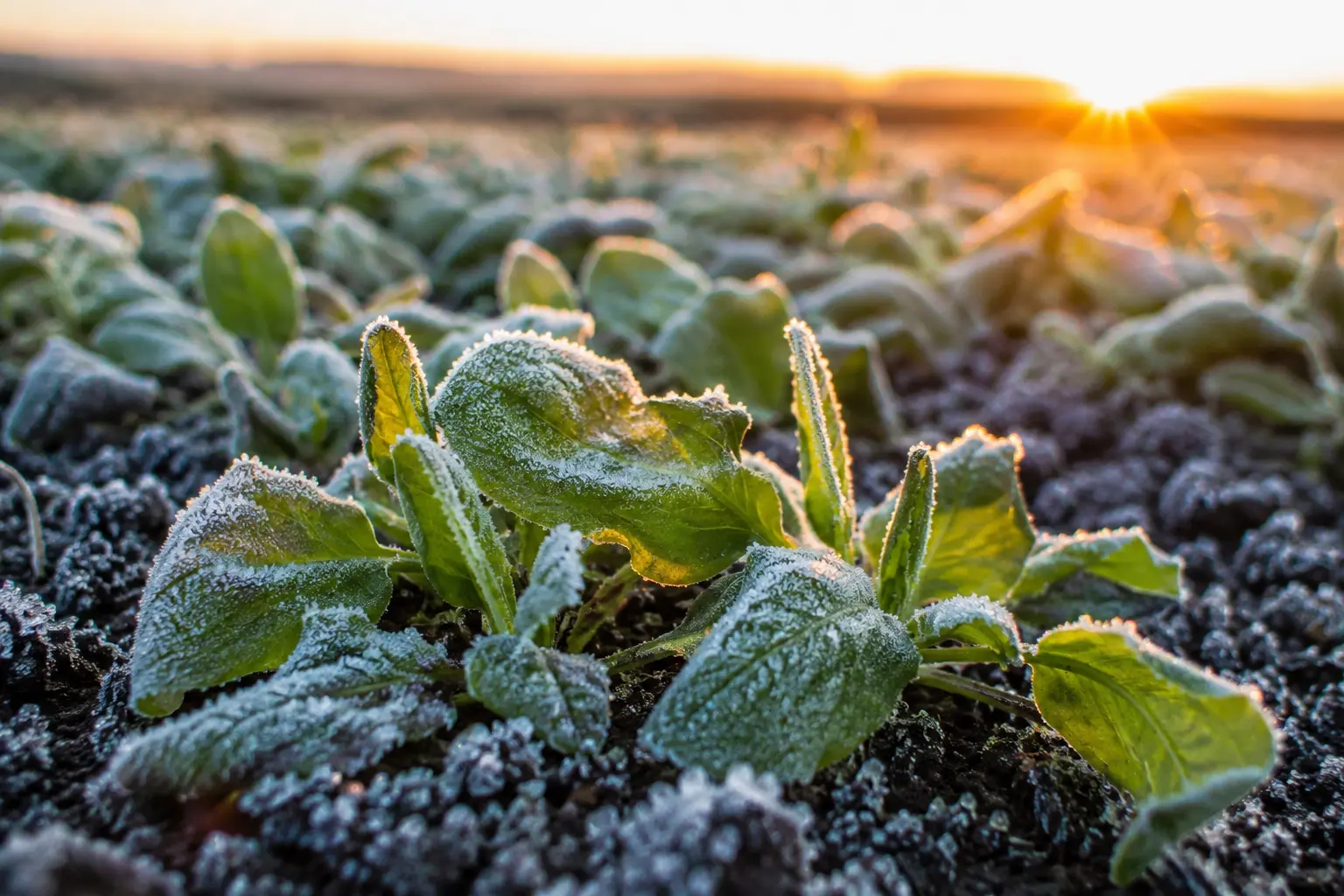
Agricultural frost is one of the most significant environmental risks affecting crop production worldwide. Even a short period of sub-zero temperatures can damage sensitive plant tissues, reduce crop quality, and cause substantial yield losses. Young shoots, flowers, and newly developing fruits are particularly vulnerable, making frost events a major concern during critical growth stages.
While weather conditions cannot be controlled, improving a plant’s natural tolerance to cold stress has become an important strategy in modern agriculture. Plant biostimulants have gained increasing attention for their ability to support the physiological processes that help crops better withstand moderate frost conditions. Rather than acting as a physical barrier against freezing temperatures, biostimulants strengthen the plant’s internal defense mechanisms before cold stress occurs.
How Does Frost Damage Plant Cells?
Contrary to common belief, frost injury is not caused simply by low temperature. The primary damage occurs when water inside or around plant cells begins to freeze.
As temperatures fall below the freezing point, ice crystals start to develop within plant tissues. These crystals expand as they form, placing mechanical stress on cellular structures. When severe enough, they rupture cell membranes, causing irreversible damage to plant tissues.
Once cell membranes lose their integrity, normal physiological processes can no longer continue. Damaged tissues gradually dehydrate, turn brown, and eventually die, leading to reduced crop quality and yield.
The severity of frost injury depends on several factors, including crop species, developmental stage, exposure duration, and minimum temperature reached.
How Biostimulants Prepare Plants Before Frost Events
Plant biostimulants do not function as antifreeze products sprayed onto plant surfaces.
Instead, they stimulate natural physiological responses that prepare plant tissues to tolerate moderate cold stress more effectively.
For maximum effectiveness, biostimulants are generally applied before anticipated frost events, allowing sufficient time for the plant to activate its natural protective mechanisms.
This preventive approach supports the plant before stress occurs rather than attempting to repair damage afterward.
Supporting Osmotic Adjustment and Cellular Stability
One of the primary physiological responses promoted by biostimulants is improved osmotic regulation.
Biologically active compounds help increase the concentration of compatible solutes within plant cells, contributing to a lower freezing point of cellular fluids. Although this does not prevent freezing during severe frost events, it may reduce the likelihood of intracellular ice formation under moderate freezing conditions.
Maintaining cellular water balance also helps preserve cell turgor and physiological activity before cold stress reaches damaging levels.
This osmotic adjustment represents one of the plant’s most important natural defense mechanisms against freezing injury.
Maintaining Flexible Cell Membranes
Healthy cell membranes are essential for plant survival during periods of low temperature.
Cold conditions often reduce membrane fluidity, making cellular structures more rigid and susceptible to mechanical damage caused by ice formation.
Biostimulants help support membrane stability by promoting balanced cellular metabolism and improving the utilization of structural nutrients involved in maintaining membrane integrity.
As a result, plant cells are better able to tolerate temporary freezing conditions and recover more efficiently once temperatures rise.
Antioxidant Defense and Faster Recovery
Frost stress also triggers oxidative stress within plant tissues.
Exposure to freezing temperatures stimulates excessive production of reactive oxygen species (ROS), which damage proteins, lipids, DNA, and cellular membranes if not properly controlled.
Plant biostimulants activate the plant’s endogenous antioxidant defense system, increasing the activity of enzymes responsible for neutralizing these reactive molecules.
Reducing oxidative damage allows plants to recover more rapidly after frost exposure and supports the restoration of normal physiological activity during favorable weather conditions.
Understanding the Limits of Biostimulants
Although plant biostimulants significantly improve stress tolerance, they should not be considered a substitute for frost protection systems such as irrigation, wind machines, or protective covers.
No biostimulant can completely protect crops from severe freezing events such as prolonged temperatures well below freezing.
Instead, their primary role is to strengthen the plant’s natural physiological resilience, helping crops better tolerate moderate frost conditions and reducing the severity of stress-related damage.
When integrated into comprehensive crop management programs, biostimulants become an important tool for improving resilience under increasingly variable climatic conditions.
Agricultural frost remains one of the most challenging environmental threats to crop production, particularly during sensitive developmental stages.
By supporting osmotic regulation, maintaining membrane stability, enhancing antioxidant activity, and strengthening natural physiological defense mechanisms, plant biostimulants help crops prepare for moderate cold stress before damage occurs.
Used as part of an integrated crop management strategy, biostimulants provide growers with a science-based approach to improving crop resilience and supporting more stable agricultural production under changing environmental conditions.