
Water scarcity and prolonged drought are among the most significant challenges affecting agricultural productivity. Plant biostimulants improve water-use efficiency by supporting root development, maintaining cellular water balance, and optimizing physiological processes under limited water conditions. This article explores how biostimulants help crops adapt to drought stress while contributing to more resilient and sustainable agricultural production.
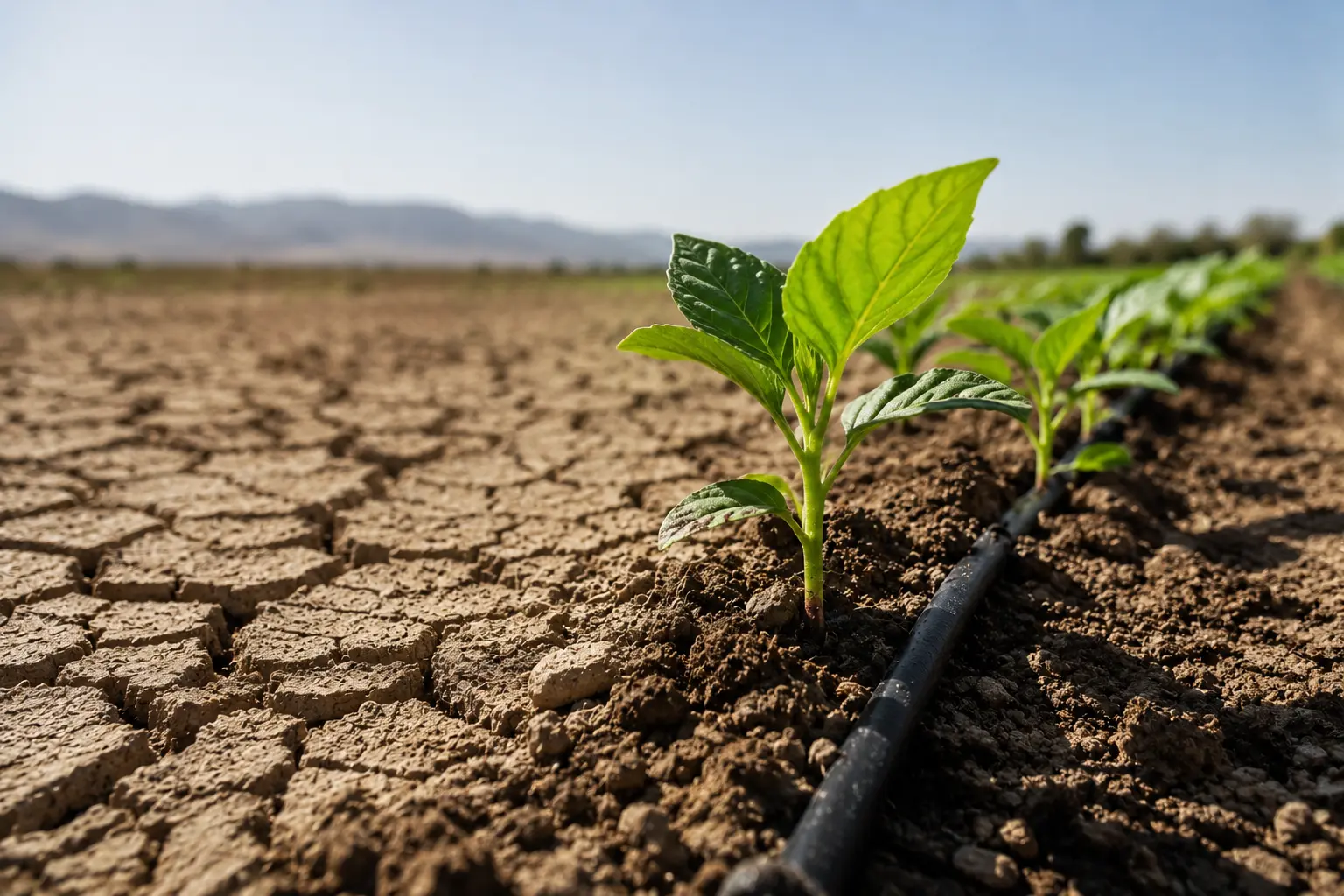

Abiotic stress factors such as drought and frost can significantly reduce crop productivity by disrupting normal plant physiology. Rather than forming a physical barrier, plant biostimulants strengthen the plant’s natural defense mechanisms by supporting root development, osmotic regulation, antioxidant activity, and efficient water use. This article explores how biostimulants help crops tolerate environmental stress and contribute to more resilient and sustainable agricultural production.
Drought is no longer an exceptional risk for agriculture; it is the new reality of the system. Uncertainty in precipitation regimes, prolonged water scarcity, and sudden heat waves not only make production difficult but also unpredictable. Today, the main question is: How can production be made sustainable with less water? The answer to this question does not lie in a single application, but in a new approach that addresses plant physiology, soil structure, and the entire production system together.
Abiotic stress refers to the pressure exerted by non-living environmental factors that negatively affect plant growth, development, and productivity. Environmental conditions such as water deficiency, extreme temperatures, frost, salinity, intense light, nutrient deficiency, and heavy metal accumulation can create abiotic stress on plants.
Drought and frost stress, exacerbated by climate change, are among the most significant environmental risks in agricultural production. These stress factors can slow down plant development, disrupt cellular balance, and lead to yield and quality losses.